
Introduction
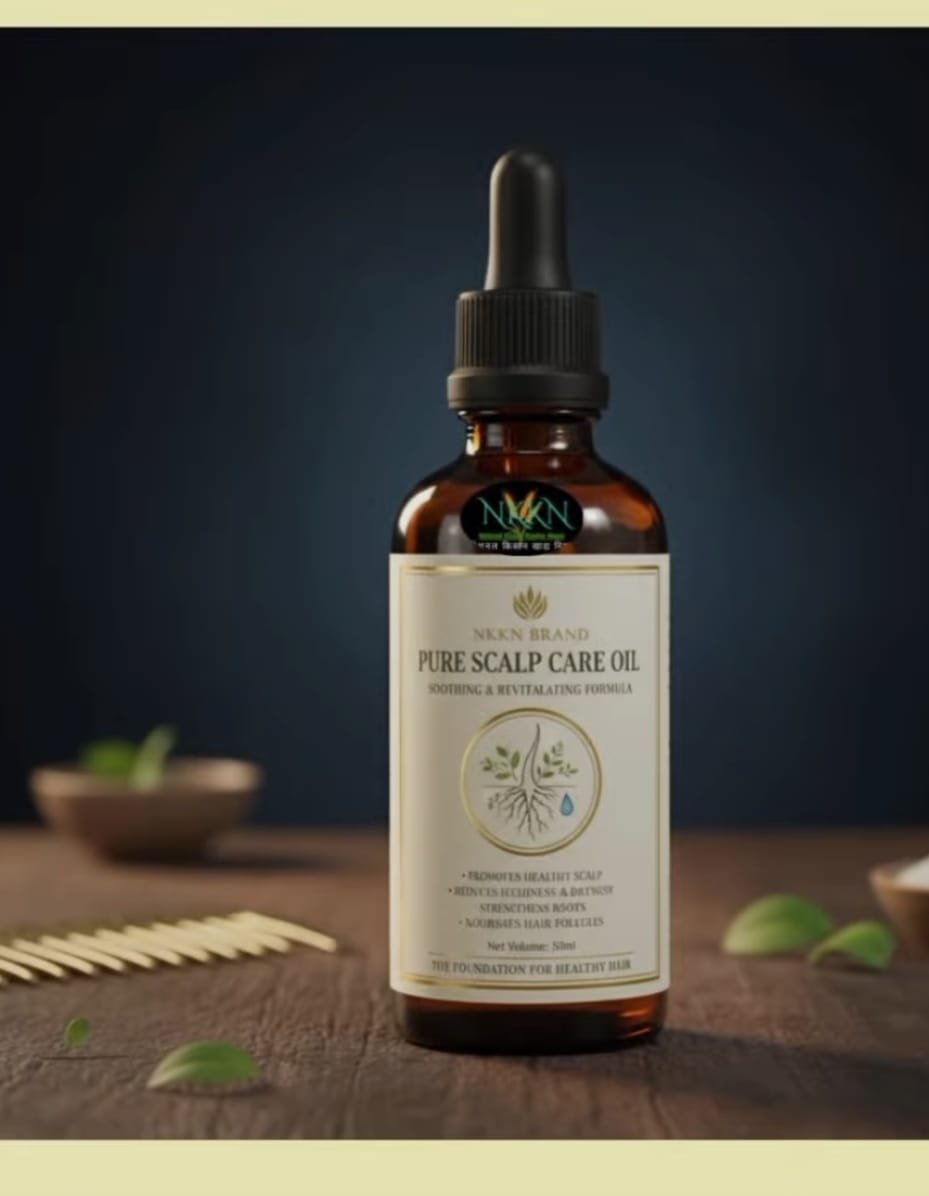
Healthy hair starts at the scalp. If you want stronger, shinier, and less fall-prone hair, the secret often lies in scalp health — not just the products you apply to strands. NKKN’s Pure Scalp Care Oil is formulated to nourish the scalp, reduce dryness and itching, balance oil production, and create the optimal environment for hair growth. This guide explains what scalp care oil does, why it matters, what makes NKKN’s formula special, how to use it, and practical routines and tips to get real results.
Why scalp health matters
The scalp is the soil from which your hair grows. Like any crop, if the soil is poor, the yield will suffer. A healthy scalp:
- Provides proper nutrients and blood flow to hair follicles.
- Maintains the right moisture balance — not too dry, not too oily.
- Prevents common issues such as dandruff, itchiness, inflammation, and fungal infections.
- Reduces hair breakage by improving follicle anchoring and strand condition.
Common scalp problems and their causes
Before treating the scalp, it helps to know what might be going wrong:
- Dry, flaky scalp: often caused by dehydration, harsh shampoos, or weather.
- Oily scalp: overproduction of sebum due to genetics, stress, or improper cleansing.
- Dandruff: a mix of excess oil, yeast (Malassezia), and rapid skin cell turnover.
- Itchiness and irritation: from allergic reactions, product buildup, or sensitivity.
- Thinning hair and excessive fall: could be nutritional, hormonal, or due to chronic inflammation.
How scalp oil helps
Scalp oils are targeted tools that address several scalp concerns:
- Nourishment: oils carry fat-soluble vitamins and fatty acids that strengthen the skin barrier and hair roots.
- Hydration: certain oils help retain moisture and reduce trans-epidermal water loss.
- Soothing: anti-inflammatory botanicals calm irritation and reduce redness.
- Antifungal/antimicrobial actions: some natural oils (like tea tree) help manage dandruff-causing yeast.
- Stimulate circulation: massage with oil increases blood flow to the follicles, supporting growth.
What makes NKKN Pure Scalp Care Oil different
NKKN’s Pure Scalp Care Oil stands out because it’s thoughtfully balanced for scalp health:
- Clean, minimal ingredient list — no unnecessary fragrances, parabens, sulfates, or silicones.
- Lightweight carrier oils chosen to nourish without heavy residue.
- Targeted actives to gently reduce dandruff, soothe inflammation, and support follicles.
- pH-friendly formulation to be compatible with scalp skin.
- Cruelty-free and ethically sourced botanicals, aligned with clean-beauty standards.
Ingredients breakdown — what to look for
A strong scalp oil blends emollient carrier oils with targeted botanicals and stabilizers. NKKN’s blend (or similar formulations) typically includes:
Carrier oils
- Jojoba oil: mimics sebum, balances oil production, non-greasy.
- Fractionated coconut (MCT): lightweight, good penetration without heavy buildup.
- Sweet almond / argan: vitamin-rich, protective for scalp and strands.
Active botanicals / oils
- Tea tree oil: antifungal and anti-yeast (used in low concentrations).
- Rosemary oil: supports circulation and provides a pleasant aroma.
- Peppermint oil: cooling sensation; may increase blood flow (used diluted).
- Amla / bhringraj: Ayurvedic herbs traditionally used to strengthen hair.
- Licorice extract: soothes irritation and inflammation.
Vitamins & antioxidants
- Vitamin E (tocopherol): protects against oxidation and stabilizes the oil.
- Panthenol (pro-vitamin B5): improves hair elasticity and smoothness.
Note about balance: heavy carriers or excess essential oils can cause buildup or irritation. NKKN’s formula aims for light absorption and safe essential-oil concentrations.

How to use NKKN Pure Scalp Care Oil — step-by-step routine
Using scalp oil correctly matters more than frequency. Recommended approach:
- Frequency
- Normal to dry scalp: 1–2 times/week.
- Oily scalp: once/week or every 10–14 days — apply lightly.
- Sensitive/acne-prone scalp: patch test first; use less frequently (every 2 weeks).
- Before application
- Choose a day when you can leave the oil for at least 30 minutes (overnight is fine).
- Slightly warm the oil (place bottle in warm water for a few minutes).
- Sectioning
- Divide hair into 4–6 sections for even coverage.
- Application
- Use a dropper/nozzle to apply a few drops along parting lines.
- Use 6–12 drops depending on length/dryness.
- Massage gently with fingertips (not nails) in circular motions for 5–10 minutes.
- Wait time
- Leave 30 minutes to overnight. For heavy dryness or dandruff, consider overnight under a shower cap.
- Washing
- Rinse with warm water and use a mild sulfate-free shampoo. Double-shampoo if needed to remove residue.
- Post-care
- Gently towel-dry; avoid vigorous rubbing.
- Use conditioner sparingly on ends — avoid heavy conditioners on the scalp.
DIY scalp massage technique (best practice)
- Use finger pads and gentle pressure; move the skin in small circles rather than rubbing strands.
- Work front → back and sides → crown to encourage circulation.
- Finish with light upward strokes along the hairline for lymphatic support.
Before-and-after expectations
- First few weeks: less itch, reduced flakes, softer scalp feel.
- 1–3 months: improved hair texture, less breakage.
- Long-term: healthier-looking, stronger hair if you maintain the routine.
Who should use scalp oil — and who should be cautious
Good candidates: dry scalp, dandruff, brittle hair, those wanting improved scalp circulation.
Be cautious if: you have severe scalp acne, cysts, known allergies (nut oils), or extremely oily scalp. For severe or painful conditions, consult a dermatologist before using oils.
Scientific support — brief notes
- Tea tree oil: demonstrated antifungal effects against Malassezia (linked to dandruff).
- Jojoba oil: structurally similar to sebum and helps balance oil.
- Peppermint oil: in limited studies, shown to increase follicle health (animal/human evidence limited).
- Panthenol: benefits hair shaft elasticity and smoothness.
Realistic marketing claims — what to watch for
- Avoid “overnight miracle” promises — hair cycles are gradual.
- Be skeptical of permanent regrowth claims for genetic hair loss.
- Prefer transparent ingredient lists over vague “proprietary blends.”
Quick guide: types of scalp oils
- Light oils (jojoba, grapeseed): best for oily/normal scalps.
- Medium oils (argan, almond): for normal to dry scalps.
- Heavy oils (castor): for very dry or curly hair — blend with lighter oils to prevent buildup.
Quick DIY scalp soothing mix (optional)
- 2 tbsp fractionated coconut or jojoba + 5 drops tea tree + 3 drops rosemary (1 drop peppermint optional).
- Patch test before full use. Rinse after 30–60 minutes. (For occasional testing only; not a substitute for quality formulations.)
Scalp-friendly diet & lifestyle
Topical care works best with good nutrition and habits:
- Protein: eggs, lentils, lean meats for keratin synthesis.
- Iron & zinc: leafy greens, lentils, nuts, seeds; low iron can contribute to shedding.
- Omega-3s: fatty fish, chia, flaxseed — reduce inflammation.
- Hydration: water supports skin health.
- Sleep & stress: chronic stress impacts hormones and hair; practice stress management.
Storage, shelf life & keeping your bottle fresh
- Store in a cool, dry place away from direct sunlight.
- Use dark glass bottles (amber) if possible.
- Keep the cap closed to avoid oxidation.
- Typical shelf life: ~12–24 months (check the label).
Troubleshooting — buildup, irritation & increased shedding
- Buildup: reduce frequency, use lighter oils, shampoo twice.
- Increased shedding: stop use and consult dermatologist if shedding is sudden or severe.
- Allergic reaction: stop immediately, wash scalp, seek medical care if severe.
How to integrate NKKN oil into at-home and salon routines
- At-home: weekly pre-wash ritual for maintenance.
- Salon: request pre-wash oil massage before chemical services.
- Post-treatment: light application to lengths (not the scalp) after smoothing/chemical processes to condition the shaft.
When to see a dermatologist
If scalp problems are persistent, painful, or accompanied by sudden hair loss, consult a dermatologist to rule out infections, autoimmune issues, or hormonal causes. Oils are supportive, not diagnostic or curative for medical conditions.
Sustainability, packaging & user responsibility
Prefer products that use recyclable packaging, cruelty-free testing, and transparent sourcing. Dispose of or recycle packaging responsibly; reuse sterilized glass bottles for DIY blends if you like.
Final thoughts — the long game of scalp care
Great hair is the result of consistent care, not instant miracles. NKKN Pure Scalp Care Oil is designed to be a gentle and effective addition to a broader hair-health routine: nourishing the scalp, restoring balance, and creating a strong foundation for healthier hair. Use it thoughtfully, combine it with a healthy lifestyle, and give it time to work. With regular use and correct technique, you’ll likely notice less itch, fewer flakes, less breakage, and better-looking hair.
Quick start checklist
- Patch test behind ear.
- Warm bottle slightly before use.
- Apply 6–12 drops; section hair for even application.
- Massage 5–10 minutes; leave 30 minutes–overnight.
- Rinse and double-shampoo if needed.
- Repeat weekly or as needed.
Call to action
Try NKKN Pure Scalp Care Oil as a weekly ritual. Test for 6–8 weeks, document your progress with photos, and adjust frequency based on results. If you want, I can help convert this guide into a web-friendly blog post with SEO headings, meta description, and social captions — tell me if you’d like that and I’ll format it for you.
If you want this in Hindi, shorter form, or formatted for a blog (with SEO headings, meta description, and 3 social captions), tell me which version and I’ll convert it right away.
Tags: